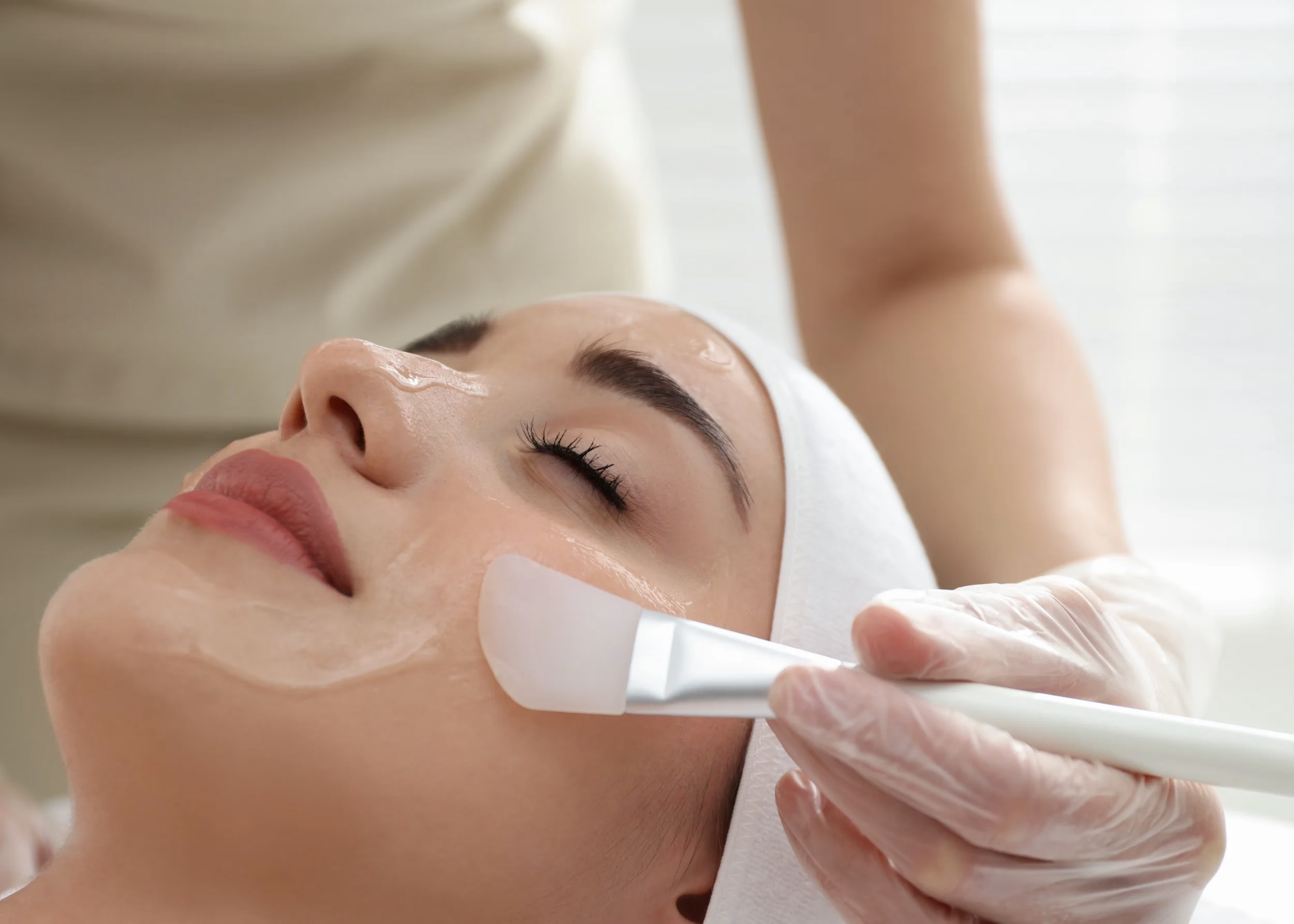
Chemical Peel vs. Laser Resurfacing: Which Treatment Is Better?
Discover the key differences between chemical peels and laser resurfacing – two of the most popular professional skin rejuvenation treatments. Learn how each treatment works, what concerns they address, recovery expectations, and how to choose the right option for your skin at Aesthetemed Beauty & Wellness Clinic in Hallandale Beach, Florida. Message us on WhatsApp to schedule your personalized consultation.
What Is a Chemical Peel?
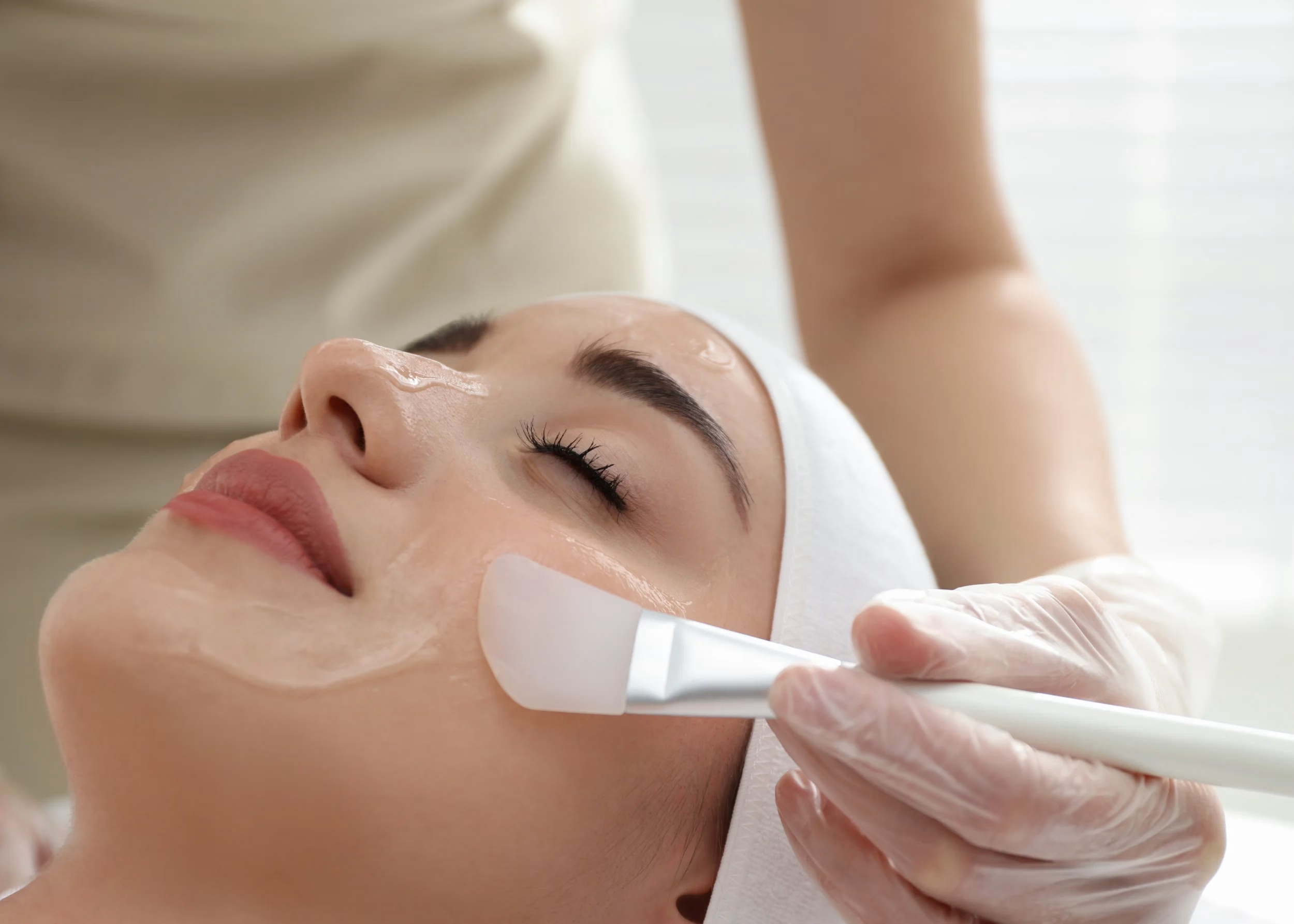
A chemical peel is a skin rejuvenation treatment that uses specialized chemical solutions to exfoliate the outer layers of the skin. By removing dead skin cells and stimulating cellular turnover, chemical peels reveal fresher, smoother, and more even-toned skin beneath.
Chemical peels are available in varying strengths – from mild superficial peels to deeper peels that penetrate more profoundly into the skin. The right peel for you depends on your skin type, concerns, and desired results.
What Is Laser Resurfacing?
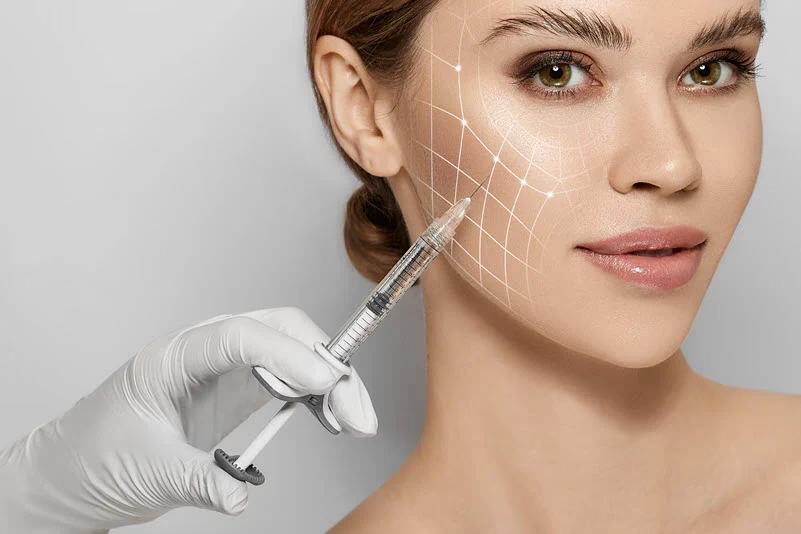
Laser resurfacing uses focused beams of light energy to precisely treat specific skin concerns. Depending on the type of laser used, treatment can target the outer layer of the skin (ablative lasers) or heat the deeper layers while preserving the surface (non-ablative lasers) to stimulate collagen production and skin renewal.
Laser resurfacing is highly customizable, allowing providers to adjust energy levels and depth to address a wide range of skin conditions with remarkable precision. At Aesthetemed we offer advanced options such as UltraClear Laser.
Chemical Peel vs. Laser Resurfacing: How Do They Work?
Both treatments aim to improve skin appearance by removing damaged layers and encouraging new cell growth. However, they achieve this through different mechanisms.
| Feature |
Chemical Peel |
Laser Resurfacing |
| Mechanism |
Uses chemical solutions to exfoliate and peel the skin |
Uses focused light energy to precisely remove or heat targeted tissue |
| Depth Control |
Peel strength determines depth (superficial, medium, deep) |
Precise control over treatment depth and intensity |
| Precision |
More generalized treatment area |
High precision – can target specific concerns with accuracy |
| Collagen Stimulation |
Yes, especially with medium and deep peels |
Yes, both ablative and non-ablative lasers stimulate collagen |
| Best For |
Pigmentation, fine lines, texture, acne scars, dullness |
Wrinkles, deeper scars, pigmentation, vascular lesions, skin laxity |
What Concerns Can Each Treatment Address?
Chemical Peels Are Effective For:
- Uneven skin tone and pigmentation concerns
- Fine lines and mild wrinkles
- Rough skin texture and dullness
- Mild to moderate acne scars
- Sun-damaged skin including sun spots and freckles
- Enlarged pores
- Melasma (depending on peel type)
- Active acne (salicylic acid peels)
Laser Resurfacing Is Effective For:
- Moderate to deep wrinkles and expression lines
- Atrophic scars including acne and surgical scars
- Significant pigmentation including age spots and sun damage
- Skin laxity and loss of firmness
- Vascular concerns like broken capillaries and rosacea
- Actinic keratosis (precancerous lesions)
- Overall skin rejuvenation with dramatic results
Key Differences: What You Should Know
1. Treatment Experience
Chemical peels typically involve applying a solution to the skin, which may cause a mild tingling, warming, or stinging sensation. The peel is left on for a specific time before being neutralized or removed.
Laser resurfacing uses a handheld device that delivers pulses of light. Patients often describe the sensation as a snapping rubber band or warming sensation. Numbing cream or local anesthesia may be used for comfort.
2. Recovery and Downtime
Recovery varies significantly for both treatments depending on the depth and intensity used.
| Treatment Type |
Downtime |
Visible Peeling/Flaking |
Redness Duration |
| Superficial Peel |
Minimal to none |
Mild flaking for 1-3 days |
A few hours to 1 day |
| Medium Peel |
5-7 days |
Moderate peeling for 3-5 days |
Up to 1 week |
| Deep Peel |
2-3 weeks |
Significant peeling for 7-14 days |
Several weeks |
| Non-Ablative Laser |
1-3 days |
Minimal to none |
1-3 days |
| Ablative Laser |
1-3 weeks |
Significant for 5-14 days |
2-4 weeks |
3. Number of Sessions
Chemical peels often require a series of treatments – especially for superficial peels – to achieve optimal results. A typical course may include 3-6 sessions spaced several weeks apart.
Laser resurfacing may be effective in a single session for some concerns, though multiple sessions are often recommended for more significant improvement. Non-ablative lasers generally require 3-5 sessions, while ablative lasers may need only one session for dramatic results.
4. Cost Considerations
Generally, chemical peels are more affordable per session than laser resurfacing, making them an accessible entry point for many patients. However, because peels often require a series of treatments, the overall cost may be comparable to laser treatments over time.
Laser resurfacing typically has a higher upfront cost due to the advanced technology and expertise required, but may achieve results in fewer sessions.
Benefits of Chemical Peels
1. Versatile and Customizable
With various peel strengths and formulations (glycolic acid, salicylic acid, TCA, lactic acid, etc.), chemical peels can be tailored to almost any skin type and concern.
2. Lower Cost Entry Point
For patients new to professional skin treatments, chemical peels offer an effective option at a more accessible price point.
3. Excellent for Pigmentation
Chemical peels are particularly effective at addressing hyperpigmentation, melasma, and sun spots by breaking down excess pigment in the skin.
4. Can Treat Active Acne
Certain chemical peels, especially salicylic acid peels, can help manage active acne by unclogging pores and reducing inflammation.
5. Minimal Downtime Options Available
Superficial peels offer improvement with little to no downtime, making them convenient for busy schedules.
Benefits of Laser Resurfacing
1. Unmatched Precision
Lasers can be precisely calibrated to target specific skin concerns while preserving healthy surrounding tissue. This accuracy makes them ideal for treating delicate areas around the eyes and mouth.
2. Dramatic Results
For patients with moderate to severe skin concerns, laser resurfacing often delivers more dramatic improvement than chemical peels, particularly for deep wrinkles, scars, and skin laxity.
3. Significant Collagen Stimulation
Both ablative and non-ablative lasers penetrate deeply to stimulate collagen production, resulting in ongoing improvement over months following treatment.
4. Single-Treatment Option
For some concerns, significant results can be achieved in a single laser session, reducing the time commitment compared to a series of peels.
5. Treats Vascular Concerns
Vascular lasers can specifically target redness, broken capillaries, and rosacea – concerns that chemical peels typically cannot address effectively.
Which Treatment Is Right for You?
Choosing between a chemical peel and laser resurfacing depends on several factors unique to your skin and goals.
You May Prefer a Chemical Peel If:
- You have mild to moderate skin concerns
- You’re looking for an affordable entry point into professional skin rejuvenation
- You have primarily pigmentation concerns
- You’re comfortable with a series of treatments
- You have darker skin tones (some peels are safer for skin of color)
- You prefer minimal downtime
- You have active acne concerns
You May Prefer Laser Resurfacing If:
- You have moderate to severe wrinkles or scars
- You want the most dramatic results possible
- You have specific concerns like broken capillaries or vascular lesions
- You prefer fewer treatment sessions
- You have skin laxity or loss of firmness
- You’re looking for long-lasting improvement
- You have concerns that haven’t responded to other treatments
Ask us on WhatsApp which option suits you best.
What Happens During Treatment at Aesthetemed?
Chemical Peel Session:
- Consultation: Your provider evaluates your skin and discusses your concerns and goals
- Preparation: Your skin is thoroughly cleansed
- Application: The chemical solution is carefully applied to the treatment area
- Monitoring: The peel is monitored for the appropriate time
- Neutralization: The peel is neutralized and removed
- Soothing: Post-peel calming products are applied
- Instructions: You receive detailed aftercare guidance
Laser Resurfacing Session:
- Consultation: Your provider assesses your skin and develops a treatment plan
- Preparation: Your skin is cleansed; numbing cream may be applied
- Eye protection: Protective shields are placed for safety
- Treatment: The laser device is passed over the treatment area
- Cooling: Many laser devices include cooling technology for comfort
- Post-treatment: Healing and protective products are applied
- Instructions: Comprehensive aftercare guidance is provided
What Results Can You Expect?
Chemical Peel Results Timeline:
| Phase |
What You May Notice |
| Immediately After |
Temporary redness, warmth, or sensitivity |
| Days 1-3 |
Peeling or flaking begins; skin may appear darker before improvement |
| Days 4-7 |
Peeling subsides; fresher, brighter skin emerges |
| Weeks 2-4 |
Ongoing improvement as new collagen forms and pigmentation clears |
| Series Completion |
Full results appear 1-2 months after completing recommended sessions |
Laser Resurfacing Results Timeline:
| Phase |
What You May Notice |
| Immediately After |
Redness, swelling, warmth; treated areas may feel like a sunburn |
| Days 1-5 |
Recovery phase; peeling and flaking occur (ablative lasers) |
| Week 1-2 |
Skin begins to heal; visible improvement becomes apparent |
| Weeks 3-4 |
Significant improvement in texture, tone, and firmness |
| Months 2-6 |
Ongoing collagen stimulation continues to improve results |
Can Chemical Peels and Laser Resurfacing Be Combined?
Yes! In many cases, chemical peels and laser resurfacing can be complementary treatments within a comprehensive skin rejuvenation plan. Your provider at Aesthetemed may recommend:
- Laser first for dramatic skin remodeling, followed by maintenance peels
- Peels first to address surface pigmentation, followed by laser for deeper concerns
- Alternating treatments to address different layers of the skin
- Combining laser resurfacing with other services like PRP Therapy or Morpheus8 for enhanced results
Important: Combining treatments must be carefully planned and spaced appropriately to ensure safety and optimal results. Your provider will create a personalized timeline based on your skin’s needs.
Aftercare: Protecting Your Investment
Regardless of which treatment you choose, proper aftercare is essential for achieving the best possible results and minimizing complications.
Essential Aftercare Tips:
- Sun protection is non-negotiable: Apply broad-spectrum SPF 30+ daily without exception
- Avoid direct sun exposure: Especially during peak hours for several weeks post-treatment
- Keep skin hydrated: Use gentle, hydrating products as recommended by your provider
- Do not pick or peel: Allow your skin to shed naturally to avoid scarring
- Avoid harsh skincare: Skip retinoids, acids, and exfoliants until cleared
- Follow instructions carefully: Your provider’s aftercare protocol is designed for your specific treatment
- Stay consistent: Maintain your results with a personalized home care routine
Potential Risks and Side Effects
Both treatments are generally safe when performed by qualified professionals, but all skin treatments carry some risk.
Chemical Peel Risks:
- Post-inflammatory hyperpigmentation (especially in darker skin types)
- Hypopigmentation (loss of skin color)
- Infection (rare)
- Scarring (rare, more common with deep peels)
- Reactivation of cold sores (if prone)
- Uneven peeling or results
Laser Resurfacing Risks:
- Redness, swelling, and discomfort
- Changes in pigmentation (temporary or permanent)
- Infection
- Scarring (rare with proper technique)
- Reactivation of cold sores
- Prolonged redness (more common with ablative lasers)
Risk reduction: Choosing an experienced provider, following pre-treatment and post-treatment instructions, and being honest about your medical history and medications can significantly reduce your risk.
Who Is Not a Good Candidate?
Chemical Peels May Not Be Suitable For:
- Individuals with active skin infections or open wounds
- Those who are pregnant or nursing (some peel ingredients are contraindicated)
- People with certain autoimmune disorders
- Those who have used isotretinoin (Accutane) within the last 6 months
- Individuals with unrealistic expectations
- Those with very dark skin tones may require specialized peels with caution
Laser Resurfacing May Not Be Suitable For:
- Individuals with active skin infections
- Those with very dark skin tones (depending on laser type)
- People who have used isotretinoin within the last 6-12 months
- Those with certain medical conditions affecting healing
- Individuals with a history of keloid scarring
- Pregnant or nursing women
Why Choose Aesthetemed for Your Skin Rejuvenation?
At Aesthetemed Beauty & Wellness Clinic in Hallandale Beach, Florida, we understand that choosing between a chemical peel and laser resurfacing is not always straightforward. That is why we prioritize:
Comprehensive Skin Assessment
We evaluate your skin type, medical history, concerns, and goals to recommend the most appropriate treatment – or combination of treatments – for you.
Advanced Technology
We offer state-of-the-art aesthetic technologies including advanced UltraClear Laser, versatile laser resurfacing options, and medical-grade chemical peels to address a wide range of skin concerns.
Personalized Treatment Plans
There is no one-size-fits-all approach to skin rejuvenation. Your treatment plan is customized to your unique skin characteristics and aesthetic goals.
Expert Medical Supervision
Our experienced team provides medical-grade treatments with safety as our top priority. We monitor your progress and adjust your plan as needed for optimal results.
Transparent Pricing & Membership Benefits – view the full price list and save 30% with the AM Club membership.
Frequently Asked Questions
Which treatment is more painful?
Both treatments involve some discomfort, but it is typically manageable. Chemical peels may cause a stinging or warming sensation, while laser resurfacing often feels like a snapping rubber band. Numbing agents are often used for both procedures to enhance comfort.
How long do results last?
Results vary widely based on treatment intensity and your skincare routine. Maintenance treatments and consistent sun protection are essential for prolonging results. Chemical peels may require ongoing sessions, while laser results can last for years with proper maintenance.
Can I treat multiple areas at once?
Yes. Both chemical peels and laser resurfacing can treat multiple areas, including the face, neck, chest, and hands. Your provider will develop a treatment plan for the areas you wish to address.
Will my skin peel after laser resurfacing?
Ablative lasers cause visible peeling for 5-14 days. Non-ablative lasers typically cause little to no peeling, with results appearing more gradually over time.
Can I wear makeup after treatment?
Your provider will advise when makeup can be safely applied. Generally, you should avoid makeup for at least 24-48 hours and use only mineral or non-irritating products when you resume wearing it.
Is one treatment safer than the other?
Both treatments are safe when performed by qualified professionals. Safety depends on your skin type, the treatment selected, the expertise of your provider, and your adherence to aftercare instructions.
Do chemical peels work on wrinkles?
Yes. Medium and deep peels can significantly improve fine lines and mild wrinkles. For deeper wrinkles, laser resurfacing may be more effective.
Can I get either treatment if I have sensitive skin?
Yes, but treatment selection and settings must be carefully chosen. Your provider will assess your skin and recommend the gentlest option that still delivers the results you want.
Ready to Choose Your Treatment?
Still unsure whether a chemical peel or laser resurfacing is the right option for you? The best way to decide is through a professional consultation where your skin can be evaluated and your goals discussed in depth.
At Aesthetemed Beauty & Wellness Clinic in Hallandale Beach, Florida, we are committed to helping you achieve healthier, more radiant skin with personalized care and advanced aesthetic technologies.
💬 Book Consultation on WhatsApp
AestheteMed · Hallandale Beach, FL · (786) 966-7878
Related Services at Aesthetemed
Depending on your skin concerns and goals, your provider may also recommend exploring these complementary treatments:
Visit Aesthetemed
Location: 2100 E Hallandale Beach Blvd, Suite 100, Hallandale Beach, Florida – serving Miami, Fort Lauderdale, Aventura, Hollywood, and Sunny Isles Beach. Get directions.
Hours:
- Monday – Saturday: 9am to 7pm
- Sunday: 9am to 5pm
💬 Chat with us on WhatsApp | 📞 Call (786) 966-7878
At Aesthetemed, we believe beautiful skin starts with personalized care. Our goal is to create treatment plans tailored to your unique skin concerns, helping you achieve healthier, brighter, and more confident-looking skin through the right combination of advanced technologies and professional expertise.