RF Microneedling vs. Microneedling: What’s the Difference?
Discover the key differences between traditional microneedling and radiofrequency (RF) microneedling to choose the best treatment for skin tightening, acne scars, fine lines, and overall rejuvenation. Learn the science, expected timeline, and real results at Aesthetemed Beauty & Wellness Clinic in Hallandale Beach, Florida. Message us on WhatsApp to book your personalized consultation.
What Is the Difference Between RF Microneedling and Traditional Microneedling?
Both traditional microneedling and RF microneedling are advanced skin rejuvenation treatments that utilize micro-injuries to stimulate your body’s natural wound-healing response. However, while traditional microneedling relies solely on mechanical stimulation to improve surface texture, RF microneedling adds powerful thermal radiofrequency energy delivered deep into the dermis.
By delivering heat directly to underlying tissue layers without disrupting the epidermis, RF microneedling achieves deeper structural remodeling, significant skin tightening, and subdermal fat contouring that traditional microneedling simply cannot replicate. At Aesthetemed the leading RF microneedling platform is Morpheus8.
How Each Technology Works
During treatment, specialized micro-pins create precise microscopic channels that activate skin regeneration:
- Traditional Microneedling uses ultra-fine needles to create controlled mechanical micro-injuries, triggering natural collagen and elastin synthesis in the upper dermal layers.
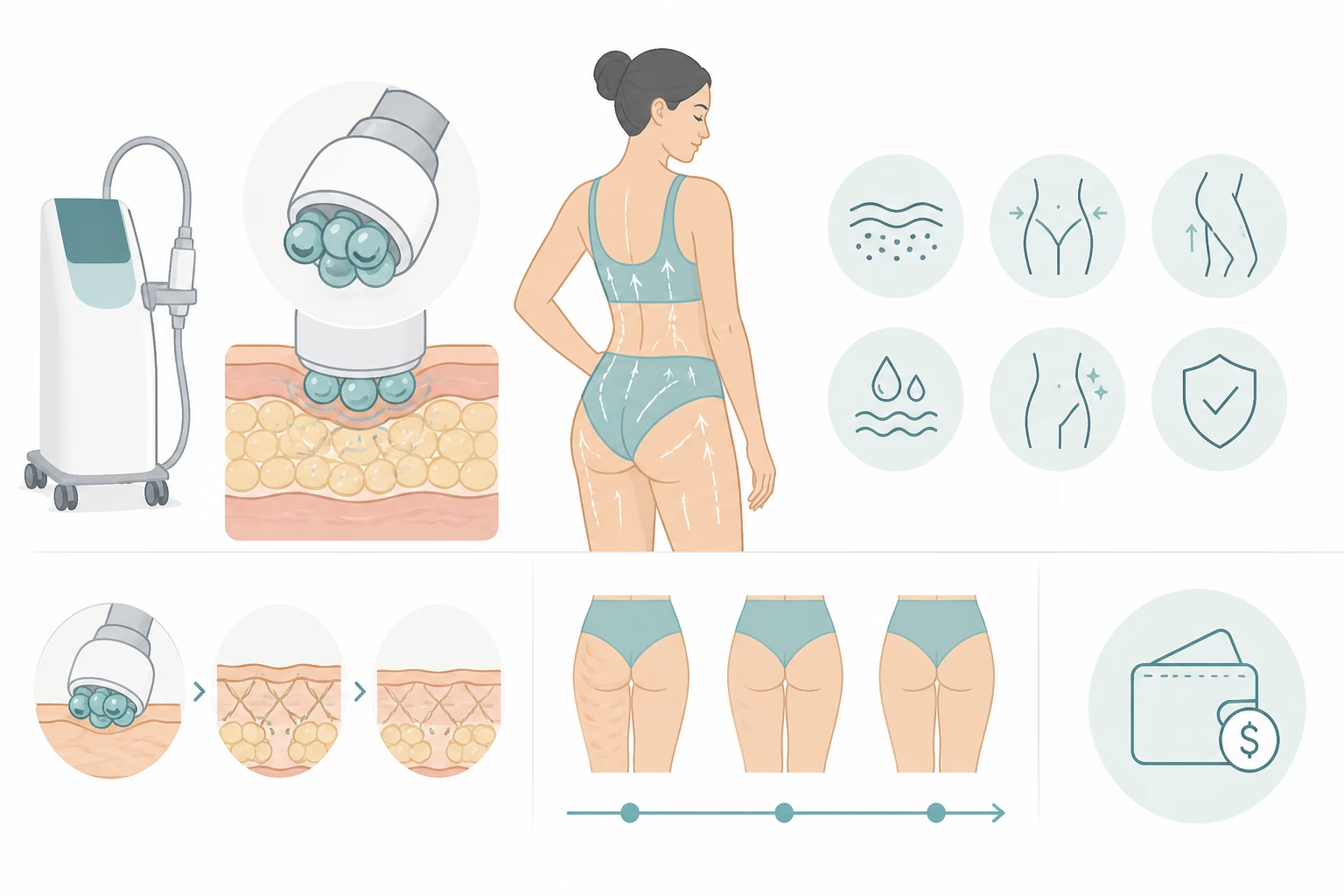
- RF Microneedling (such as Morpheus8) combines micro-pins with gentle thermal heat pulses, coagulating deep dermal tissue to shrink collagen fibers instantly and stimulate long-term neocollagenesis.
- Enhanced Penetration Depths allow RF devices to reach up to 4mm to 8mm deep compared to traditional microneedling’s 0.5mm to 2.5mm limit.
- Subdermal Fat Remodeling occurs with targeted RF energy to define jawlines and tighten saggy skin.
- Superior Scar Reduction is achieved as thermal heat breaks down dense, fibrous scar tissue more effectively.
Both modalities can be tailored to individual skin types, though RF energy provides a broader range of clinical solutions for deeper structural concerns. Many patients also enhance results with PRP therapy.
Key Benefits & Expected Results
1. Target Surface Fine Lines vs. Deep Tissue Laxity
Traditional microneedling is ideal for refreshing superficial skin layers, smoothing early fine lines, and refining skin texture. In contrast, RF microneedling reaches the structural deep dermis to treat moderate-to-severe skin laxity, jowls, and deep wrinkles.
Clinical studies show that RF microneedling delivers up to 3x greater collagen stimulation than mechanical microneedling alone, resulting in dramatic tightening and lifting effects. For even deeper structural change, some patients combine it with Endolift.
2. Versatile Clinical Applications
Depending on your personal aesthetic goals, each treatment offers unique capabilities across different treatment zones:
- Traditional Microneedling: Enlarged pores, uneven skin tone, superficial acne marks, fine lines, and general radiance.
- RF Microneedling (Morpheus8): Lower face jowls, submental fullness (double chin), deep acne scars, neck laxity, and body skin tightening (arms, abdomen, knees).
Clinical evaluations and patient outcome tracking demonstrate:
- Up to 85% improvement in overall skin tightness with RF microneedling
- 70-80% texture smoothing with traditional microneedling series
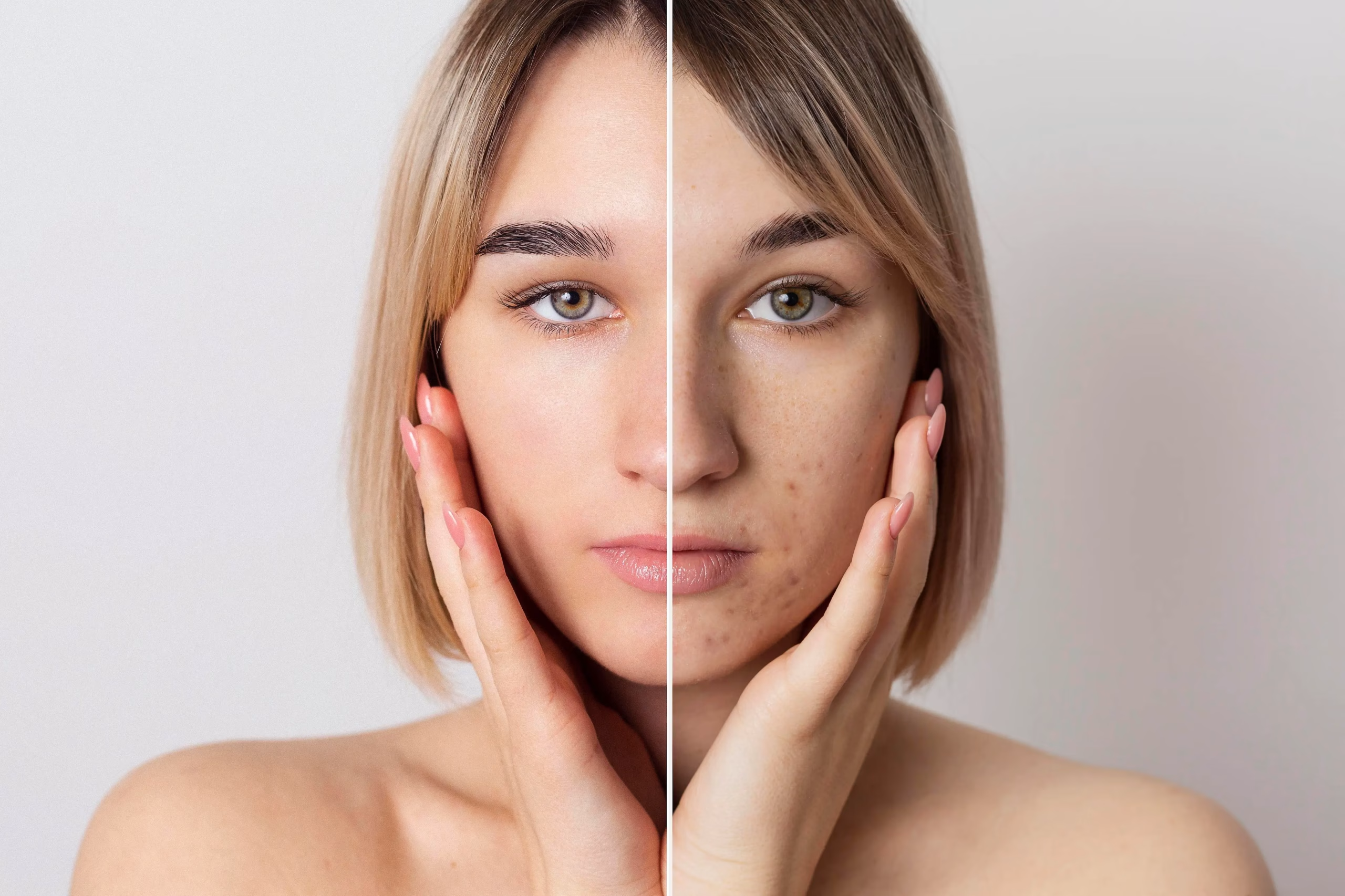
- Significant reduction in deep traumatic or acne scarring with thermal RF therapy
- Long-lasting structural enhancement across all skin layers
3. Progressive Collagen Remodeling
Both treatments leverage natural biological healing mechanisms. While surface glowing appears shortly after healing, internal structural collagen and elastin build continuously over 3 to 6 months.
4. Minimal Downtime across Both Modalities
Despite penetrating deeper into tissue layers, RF microneedling preserves the outer epidermal barrier. Both treatments offer brief recovery windows, making them popular non-surgical options.
What Does the Science Say?
The dermatological mechanisms underlying both techniques are well-documented in clinical research:
- Percutaneous Collagen Induction (PCI): Micro-punctures trigger a natural cascade where platelets release growth factors, encouraging new cell growth, fibroblast proliferation, and healthy tissue regeneration.
- Thermal Coagulation & Contraction: RF energy heats targeted dermal structures to 60°C-70°C, causing instant denaturation and tightening of existing collagen fibers while stimulating robust long-term neocollagenesis and elastogenesis.
Scientific data indicates a high patient satisfaction rate exceeding 88-92% for both procedures when selected for the appropriate clinical indication.
Side-by-Side Comparison: RF vs. Traditional Microneedling
| Feature |
RF Microneedling (e.g., Morpheus8) |
Traditional Microneedling |
| Core Technology |
Mechanical Needling + Thermal RF Energy |
Mechanical micro-injuries only |
| Penetration Depth |
Deep (Up to 4mm-8mm) |
Superficial to Mid-Dermis (0.5mm-2.5mm) |
| Skin Tightening & Lifting |
High (Remodels fat and deep connective tissue) |
Mild (Focuses on surface elastic recoil) |
| Primary Target |
Deep wrinkles, jowls, heavy scars, laxity |
Large pores, minor texture, early lines, pigment |
| Duration of Results |
12-24 months |
3-6 months |
| Downtime |
2-4 days mild pinkness / slight crusting |
1-2 days mild redness |
For deeper laser resurfacing options, explore UltraClear Laser.
Treatment Experience & Timeline
Session Experience
Before either procedure, a medical-grade topical numbing cream is applied to ensure full comfort throughout your session.
- Duration: 30-60 minutes depending on the target area and technology used
- Sensation: Mild pressure/prickling with traditional microneedling; gentle deep warmth with RF microneedling
- Anesthesia: Prescription topical numbing cream
- Downtime: 1-2 days of mild pinkness for traditional; 2-4 days of slight redness or micro-crusting for RF
Results & Treatment Schedule
| Phase |
Timeline |
Expected Outcome |
| Initial Healing |
Days 1-3 |
Redness fades; skin feels taut and smooth |
| Early Texture Boost |
Weeks 2-3 |
Noticeable improvement in skin tone and pore size |
| Peak Collagen Renewal |
Months 3-6 |
Maximal collagen contraction, scar softening, and firming |
| Maintenance |
Every 6-12 Months |
Periodic sessions sustain long-term structural youthfulness |
Which Treatment Is Right for You?
Choose Traditional Microneedling if you:
- Are looking for an accessible, budget-friendly maintenance treatment
- Want to improve mild textural roughness, enlarged pores, or dull skin
- Are experiencing early fine lines without significant skin sagging
- Prefer a very quick 24-hour recovery period
Choose RF Microneedling (Morpheus8) if you:
- Have moderate skin laxity, sagging jowls, or loose neck skin
- Want to contour subdermal tissue without surgery
- Struggle with deep acne scars, surgical scars, or stubborn wrinkles
- Desire maximum collagen production and longer-lasting structural results
Ask us on WhatsApp which option fits your goals.
Microneedling Treatments at Aesthetemed
At Aesthetemed Beauty & Wellness Clinic in Hallandale Beach, Florida, our experienced medical providers perform thorough skin evaluations to recommend the precise microneedling technology suited to your unique goals.
Why Choose Aesthetemed?
- Expert Medical Team led by experienced healthcare practitioners under physician supervision
- Tailored Treatment Plans combining custom depths, energy settings, or medical-grade serums (like PRP or exosome therapy)
- Comprehensive Care ensuring comfortable treatments and accelerated post-procedure healing
- Transparent Pricing & Membership Benefits – view the full price list and enjoy 30% off with the AM Club membership
Frequently Asked Questions
Is RF microneedling better than traditional microneedling?
Neither is strictly “better” – they serve different clinical purposes. RF microneedling is far superior for deep tightening, contouring, and scar remodeling, while traditional microneedling is excellent for surface texture maintenance and light rejuvenation.
How many sessions will I need?
For both modalities, an initial series of 3 to 4 treatments spaced 4 to 6 weeks apart yields optimal, long-lasting results.
Can microneedling be combined with PRP (Platelet-Rich Plasma)?
Yes! Adding PRP or topical exosomes to either traditional or RF microneedling significantly speeds healing and boosts collagen generation for enhanced glow and repair.
Is there any downtime?
Downtime is minimal for both. Traditional microneedling usually resolves within 24 to 48 hours. RF microneedling may cause mild redness or pinpoint grid marks for 2 to 4 days.
Which option is safe for dark skin tones?
Both treatments are safe for darker skin tones (Fitzpatrick skin types IV-VI) because they do not harm the superficial pigment-producing layer of the skin when performed by trained professionals.
Book Your Skin Consultation Today
Unsure whether traditional microneedling or RF microneedling is best for your skin concerns? Let our aesthetic specialists guide you to the perfect solution.
💬 Book Your Consultation on WhatsApp
AestheteMed · Hallandale Beach, FL · (786) 966-7878
Ready to reveal smoother, firmer skin? Book your consultation at Aesthetemed today.
Related Services at Aesthetemed
Explore our other advanced aesthetic and wellness treatments:
Visit Aesthetemed
Location: 2100 E Hallandale Beach Blvd, Suite 100, Hallandale Beach, Florida – serving Miami, Fort Lauderdale, Aventura, Hollywood, and Sunny Isles Beach. Get directions.
Hours:
- Monday – Saturday: 9am to 7pm
- Sunday: 9am to 5pm
💬 Chat with us on WhatsApp | 📞 Call (786) 966-7878
At Aesthetemed, we believe in treating the whole person, not just the symptoms. Our personalized care ensures that every client receives treatments tailored to their unique needs, helping you attain lasting beauty and enduring wellness.