Endospheres therapy is a non-invasive body and facial treatment that uses a motorised roller of silicone spheres to deliver compressive microvibration to the skin, fat layer and underlying muscle. The handpiece rolls over the treatment area, rhythmically compressing and releasing tissue to stimulate lymphatic drainage, local blood flow and connective-tissue remodelling. It is used mainly for the appearance of cellulite, puffiness and fluid retention, body contouring support, muscle tension relief and facial lifting, and it requires no needles, anaesthesia or downtime.
The system was developed in Italy and is built around one core idea: mechanical pressure applied at a controlled frequency, rather than heat, light or injectables. That makes it fundamentally different from radiofrequency, laser or injectable treatments — and it also explains why results are cumulative rather than instant, and why a course rather than a single session is standard.
This guide covers what the technology does, what a session feels like, realistic outcomes, how many treatments you need, typical pricing in the US and the UK, and how endospheres sits alongside other popular options such as exosomes therapy or anti-aging IV therapy. No hype, just the practical detail you need before booking.
What is endospheres therapy and how does it work?
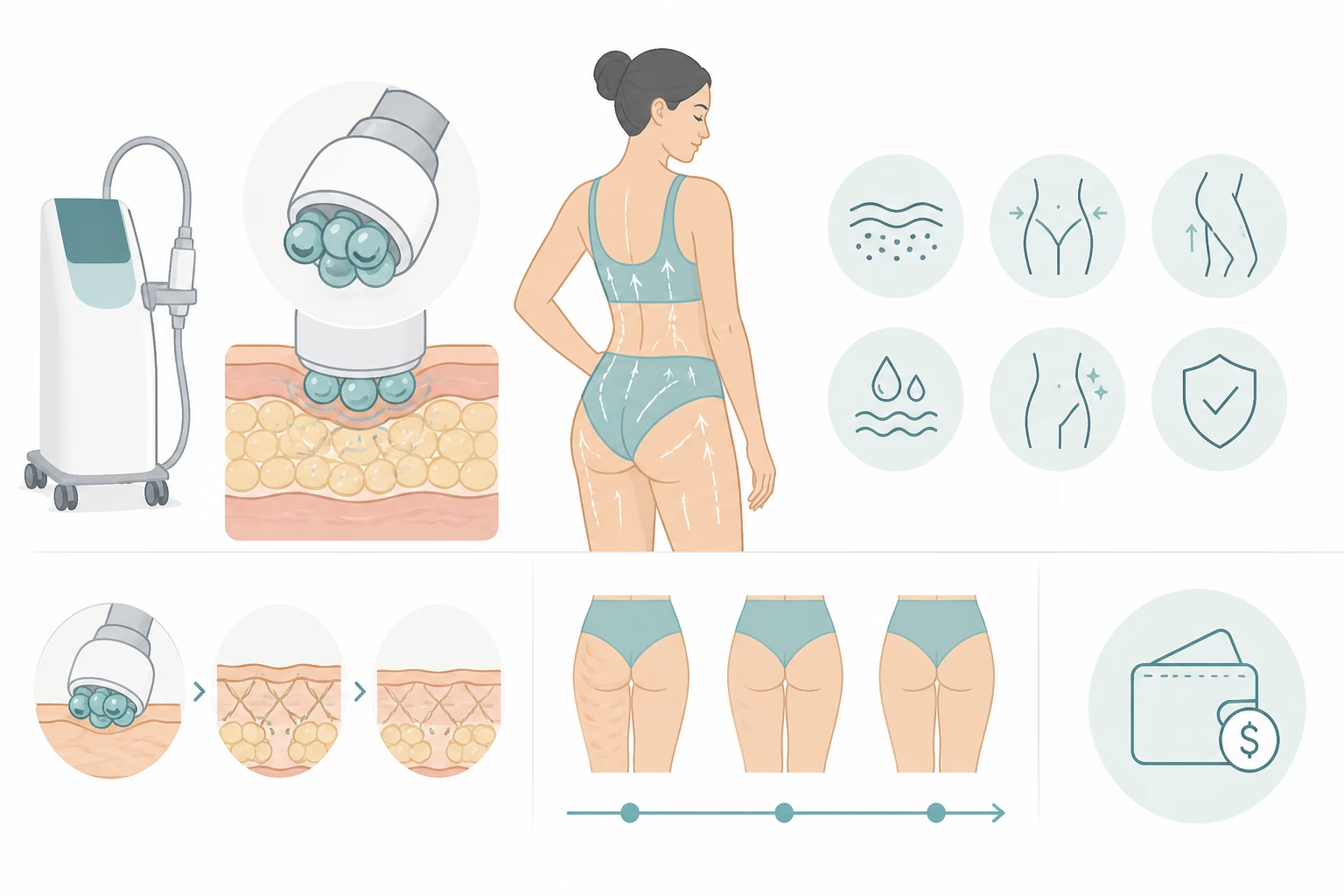
Endospheres therapy works by applying rhythmic mechanical compression to tissue through a rotating cylinder of soft spheres. This repeated compression-and-release cycle pumps fluid through the lymphatic vessels, increases local circulation and mobilises the fibrous septae that give cellulite its dimpled look.
What is inside the endospheres therapy machine?
The signature part of the endospheres therapy machine is the handpiece: a cylinder fitted with 55 silicone spheres arranged in a honeycomb pattern. Each sphere acts as an independent micro-pump, so instead of one broad pressure point you get dozens of small, alternating compressions across the treatment zone.
The console lets the practitioner adjust vibration intensity and programme type — drainage, cellulite, contouring, muscle relaxation or facial — and different handpiece sizes are used for thighs, abdomen, arms, back and face. The manufacturer describes the core action as low-frequency compressive microvibration; your practitioner should be able to show you which programme they are running and why.
What does compressive microvibration actually do?
Compressive microvibration has three mechanical effects that are easy to describe and easy to feel:
-
Lymphatic pumping. Sequential compression moves interstitial fluid toward lymph nodes, which reduces the puffiness and heaviness many people feel in the legs.
-
Vasodilation and warmth. Increased local blood flow brings a visible flush to the skin; the area usually feels warm for an hour or two afterwards.
-
Tissue mobilisation. The rolling pressure works on fibrous, congested connective tissue, which is why the skin often feels softer and more pliable after several sessions.
What it does not do is destroy fat cells or tighten skin through heat. Endosphere therapy is a circulatory and mechanical treatment, not a fat-reduction procedure, and honest clinics will say so upfront.
What happens during an endospheres therapy session?
A session takes 30–45 minutes for one or two body zones and about 20–30 minutes for the face. You lie on a treatment bed, the practitioner applies the handpiece directly to clean skin (usually without gel), and works the area in slow, directional passes toward the lymph nodes.
The sensation is closest to a firm, vibrating massage. Most people rate it as comfortable; areas with dense cellulite or fluid retention can feel tender at first and typically become less sensitive by the third or fourth visit. There is no recovery period — you can drive, train or return to work immediately. Mild redness for 30–60 minutes and an increased need to urinate the same evening are the two most common after-effects, both consistent with the drainage effect.
How many sessions do you need?
Clinics almost always recommend a course rather than a one-off. Typical protocols look like this:
-
Drainage and puffiness: 6–8 sessions, 2 per week.
-
Cellulite appearance and body contouring: 10–12 sessions, 1–2 per week.
-
Facial lifting and lymphatic work: 6–10 sessions, 1 per week.
-
Maintenance: 1–2 sessions per month once the course is complete.
Most people notice reduced heaviness and a flatter, less swollen look after 2–3 sessions. Changes in skin texture and cellulite appearance are slower and generally judged at the end of a full course, which is why standardised before-and-after photos taken in the same lighting matter more than how you feel on the day.
What are the main endosphere therapy benefits?
The realistic endosphere therapy benefits are drainage-related and textural: less fluid retention, softer connective tissue, better-looking skin surface and relief of muscle tightness. It is a supportive treatment, not a replacement for weight management or surgical contouring.
Body applications
-
Reduced appearance of cellulite on thighs, buttocks and upper arms.
-
Less swelling and heaviness in the legs, including post-flight or post-standing-shift puffiness.
-
Smoother, more even skin texture and improved tone after a full course.
-
Relief of muscle stiffness in the back, glutes and hamstrings — a reason some athletes use it for recovery.
-
Support after liposuction or other contouring procedures, once your surgeon clears you for manual work on the area.
Face applications
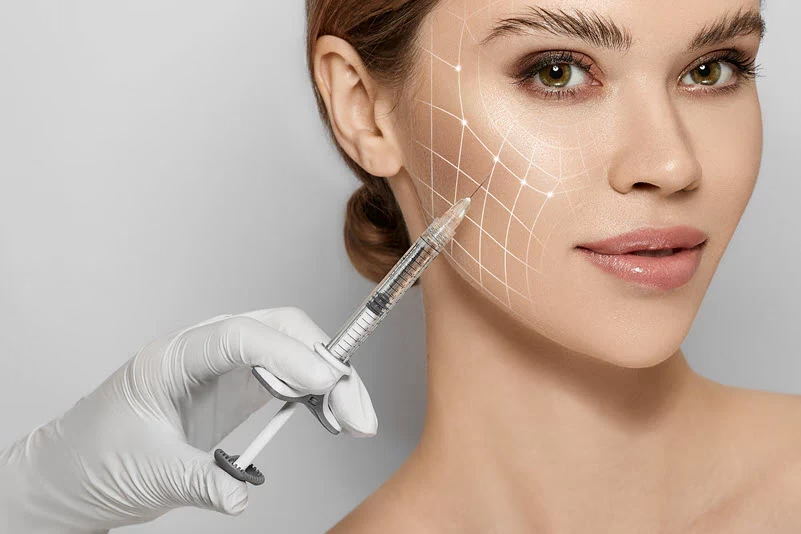
On the face, the smaller handpiece is used along the jawline, cheeks and neck to drain morning puffiness, soften the look of the nasolabial area and give a temporary lifted appearance. The effect is cumulative and short-lived without maintenance, so facial endospheres works best as a routine rather than a one-time event — for instance a session before an event, on top of monthly upkeep.
Does endospheres therapy work, and is it worth it?
Yes, for fluid retention, tissue softness and the visual appearance of cellulite — with the caveat that effects are gradual, require a full course and fade without maintenance. If your goal is significant fat loss or skin tightening, endospheres therapy alone will disappoint you.
Independent clinical evidence for mechanical microvibration devices is limited compared with, say, energy-based platforms, and cellulite in general remains difficult to treat. The American Academy of Dermatology is clear that no single cellulite treatment produces permanent results, and device clearances in the US are typically written as a temporary reduction in the appearance of cellulite or a temporary increase in local circulation — you can verify a specific device’s status through the U.S. Food and Drug Administration.
What clients report in reviews (erfahrungen, opinie, before and after)
Search interest in “endospheres therapy erfahrungen”, “endospheres therapy opinie” and “endosphères therapy vorher nachher” shows how widely the treatment is discussed in German- and Polish-speaking markets, and the themes in those reviews are consistent. Positive reports centre on lighter legs, reduced bloating and clothes fitting better around the thighs. Critical reports usually come from people who expected weight loss, booked only one or two sessions, or stopped maintenance and saw the effect fade within 4–8 weeks.
So, is endosphere therapy worth it? It is worth it if you value comfort, zero downtime and drainage-type results, and if you can commit to a course plus maintenance. It is not worth it as a substitute for nutrition, strength training or a procedure designed to remove fat.
How much does endospheres therapy cost?
Expect roughly $100–$250 per session in major US cities and £70–£150 in the UK, with package pricing reducing the per-session rate by 15–30%. Facial sessions usually sit at the lower end, multi-zone body sessions at the higher end.
|
Market
|
Single session
|
Course of 6
|
Course of 10–12
|
|
US metro clinics
|
$100–$250
|
$600–$1,300
|
$950–$2,200
|
|
Endospheres therapy London
|
£70–£150
|
£400–£800
|
£650–£1,400
|
|
Continental Europe
|
€60–€130
|
€330–€700
|
€550–€1,200
|
|
Facial-only session
|
$80–$150 / £50–£100
|
package discounts common
|
monthly maintenance advised
|
These are indicative market ranges, not fixed prices; central London, Manhattan and similar locations sit at the top of each band. When comparing quotes, check three things: session length in minutes, how many body zones are included, and whether the price covers a consultation and before-and-after photography.
How does endospheres therapy compare with other aesthetic therapies?
Endospheres therapy occupies the “mechanical, non-invasive, no-downtime” slot in an aesthetics menu. It is often combined with, rather than compared against, treatments that work on the skin’s biology or on internal wellness.
|
Treatment
|
Mechanism
|
Main target
|
Downtime
|
Typical course
|
|
Endospheres therapy
|
Compressive microvibration
|
Cellulite appearance, drainage, muscle tension
|
None
|
6–12 sessions
|
|
Exosomes therapy
|
Topical/injected signalling vesicles, usually with microneedling
|
Skin quality, post-procedure recovery, hair
|
1–3 days
|
1–3 sessions
|
|
Anti-aging IV therapy / NAD+ drips
|
Intravenous nutrients or NAD+
|
Hydration, energy, systemic wellness support
|
None
|
Varies by protocol
|
|
Forma V / Morpheus8 V vaginal therapy
|
Radiofrequency, with or without microneedling
|
Intimate tissue laxity and comfort
|
0–3 days
|
3 sessions
|
Wellness infusions are a common add-on in the same clinics. Whether it is listed as beauty IV therapy, IV therapy for liver detox, anti-aging IV therapy or a NAD+ drip, the claims vary widely by provider, so ask what is actually in the bag, who prescribes it and what evidence supports the stated benefit. Regional searches such as IV therapy Hollywood FL, benefits of NAD+ therapy Fort Mill, Huntersville or Mooresville, and Arlington or Bedford Forma V and Morpheus8 V vaginal therapy simply reflect how location-driven this market is — the questions you should ask a provider are identical everywhere.
Who should avoid it, and how do you find endospheres therapy near me?
Endospheres therapy is well tolerated, but mechanical compression is not appropriate for everyone. Always disclose your full medical history at consultation.
Contraindications to discuss first
-
Pregnancy or active breastfeeding (device-specific restrictions apply).
-
Active cancer, or lymph node removal without oncologist clearance.
-
Deep vein thrombosis, phlebitis or a history of clotting disorders.
-
Acute infection, fever, open wounds or active skin inflammation in the treatment area.
-
Uncontrolled cardiovascular disease, pacemakers or implanted devices — check with your physician.
-
Recent surgery in the area until your surgeon clears manual treatment.
A checklist for choosing a clinic
When you search for endospheres therapy near me, treat the listing as a starting point and verify the following before you pay for a package:
-
Genuine equipment. Ask which device and handpieces the clinic uses, and whether staff completed manufacturer training.
-
A real consultation. Skin assessment, medical history, goals and measurements should be recorded before session one.
-
Documented photos. Same distance, same lighting, same posture, before and after the course.
-
A written protocol. Number of sessions, frequency, zones treated and maintenance plan.
-
Honest expectation setting. If a clinic promises centimetres lost per session or permanent cellulite removal, walk away.
-
Transparent pricing. Package terms, expiry dates and refund policy in writing.
To get the most from a course, hydrate well on treatment days, keep moving between sessions, and pair the protocol with resistance training and a consistent diet. The clinic setting matters too: if you are already exploring aesthetics therapy such as skin rejuvenation, exosomes therapy or wellness infusions, a provider that can sequence treatments sensibly will get you a better overall result than booking each one in isolation.
Frequently asked questions
Here are quick, direct answers to the most common questions about endospheres therapy, covering sessions, pain, downtime, and results — read each one like an accordion entry.
How many sessions of endospheres therapy do I need?
Most clients need 8–12 sessions scheduled once or twice a week for visible results, followed by monthly maintenance sessions to keep the effects.
Does endospheres therapy hurt?
No, the treatment is generally painless. You may feel a firm rolling pressure and mild warmth, but it does not involve suction, needles, or bruising like some other body treatments.
Is there any downtime after a session?
There is no downtime. You can return to normal activities, including exercise, immediately after a session.
How long do the results last?
Results from a full course typically last several months, but they depend on diet, activity level, and whether you continue with periodic maintenance sessions.
Can endospheres therapy be combined with other treatments?
Yes, it is often combined with treatments like radiofrequency, lymphatic drainage massage, or cellulite injections to enhance overall skin texture and contouring results.
Is endospheres therapy safe for everyone?
It is safe for most adults, but it is not recommended during pregnancy, with active skin infections, blood clotting disorders, or certain vascular conditions — always disclose your medical history before booking.
What is endospheres therapy in simple terms?
It is a non-invasive treatment in which a motorised handpiece with 55 silicone spheres rolls over the skin, delivering compressive microvibration. The rhythmic pressure stimulates lymphatic drainage and local circulation and mobilises connective tissue, which improves the appearance of cellulite, reduces puffiness and relaxes tight muscles without needles or downtime.
Does endospheres therapy work for cellulite?
It improves the appearance of cellulite rather than eliminating it. Results come from better drainage and softer connective tissue, usually judged after a course of 10–12 sessions. Effects are temporary and require maintenance of one to two sessions monthly. No cellulite treatment currently produces permanent results, so expect visible improvement, not a cure.
How many endospheres therapy sessions will I need?
Most protocols run 6–12 sessions, one to two times per week. Drainage and puffiness goals often need only 6–8 sessions, while cellulite and contouring goals typically need 10–12. Many people notice lighter, less swollen legs after two or three visits, with texture changes appearing later in the course.
How much does endospheres therapy cost in London?
Endospheres therapy in London typically costs between £70 and £150 per session, with courses of six around £400–£800 and courses of ten to twelve around £650–£1,400. Central London clinics sit at the top of these ranges. Always check session length, number of body zones included and package expiry terms.
Is endospheres therapy painful, and is there downtime?
Most people describe it as a firm, vibrating massage rather than a painful treatment. Areas with dense cellulite or fluid retention can feel tender in the first two or three sessions, then settle. There is no downtime: mild redness and warmth for up to an hour and increased urination that evening are normal.
Is endosphere therapy worth it compared with other treatments?
It is worth it if your goals are drainage, comfort and gradual improvement in skin texture with zero downtime. It is not a fat-reduction or skin-tightening procedure. If you want collagen or skin-quality changes, treatments such as exosomes therapy or energy-based devices target different mechanisms and may suit you better.