Yes, hair transplants leave some scarring in the donor area, usually the back and sides of the scalp, because follicles are removed through the skin. The type of scar depends on the harvesting method. FUT (strip surgery) removes a band of scalp and typically leaves one linear scar. FUE takes follicular units one at a time with a small circular punch and typically leaves many small, dot-shaped scars spread across the donor zone. With enough surrounding hair, those dots are often hard to see, but they are not zero.
FUE is better described as a trade than as scarless: one line is replaced by many tiny points. Whether those points stay unnoticeable depends on punch size, spacing, the number of grafts taken, donor density, how your skin heals and how you care for the area afterward. This guide covers each factor, what healing usually looks like and what to ask before you book. It is general information, not medical advice. Your own scar risk can only be judged at an in-person consultation with a licensed provider.
What “No Linear Scar” Really Means
FUE leaves no linear scar because no strip of skin is removed. That does not mean it leaves no scars: each extraction leaves a small wound that heals into a tiny scar, and whether those scars can be seen depends on the factors described below.
If you are considering DHI, ask how your donor grafts will be harvested. The donor scar pattern comes from the extraction method, not from how the grafts are placed in the recipient area.
How FUE Donor Scars Heal: A Realistic Timeline
Donor sites typically move from small open wounds to crusts, then to pink dots, and finally to pale, mature scars. Timing varies from person to person, so treat the stages below as a common pattern rather than a schedule.
The first few days
Each punch site is a small open wound. Redness, tenderness, pinpoint bleeding and crusting are common. Your provider will give you specific instructions for washing, sleeping and protecting the area.
The first one to two weeks
Crusts loosen and shed, and the sites close over. Most patients need about 2 to 3 days of downtime, and scabbing usually resolves within about a week. For a step-by-step account, see our guide to hair transplant recovery day by day.
The following weeks and months
Newly closed sites often look pink or red. As the skin matures, that color usually fades gradually, and surrounding hair that was trimmed for the procedure grows back and helps cover the area. New growth in the recipient area usually starts to show around 3 to 4 months, with fuller results taking longer. That timeline is about the transplanted hair, not about how mature the donor scars are.
Longer term
Healed FUE scars typically appear as small, flat, pale or white dots with no hair growing from them. They are most likely to show when hair is cut very short or when many grafts were taken close together. If any dots stay raised, thick or itchy, or grow instead of flattening, have your provider examine them.
Can You Shave Your Head After FUE?
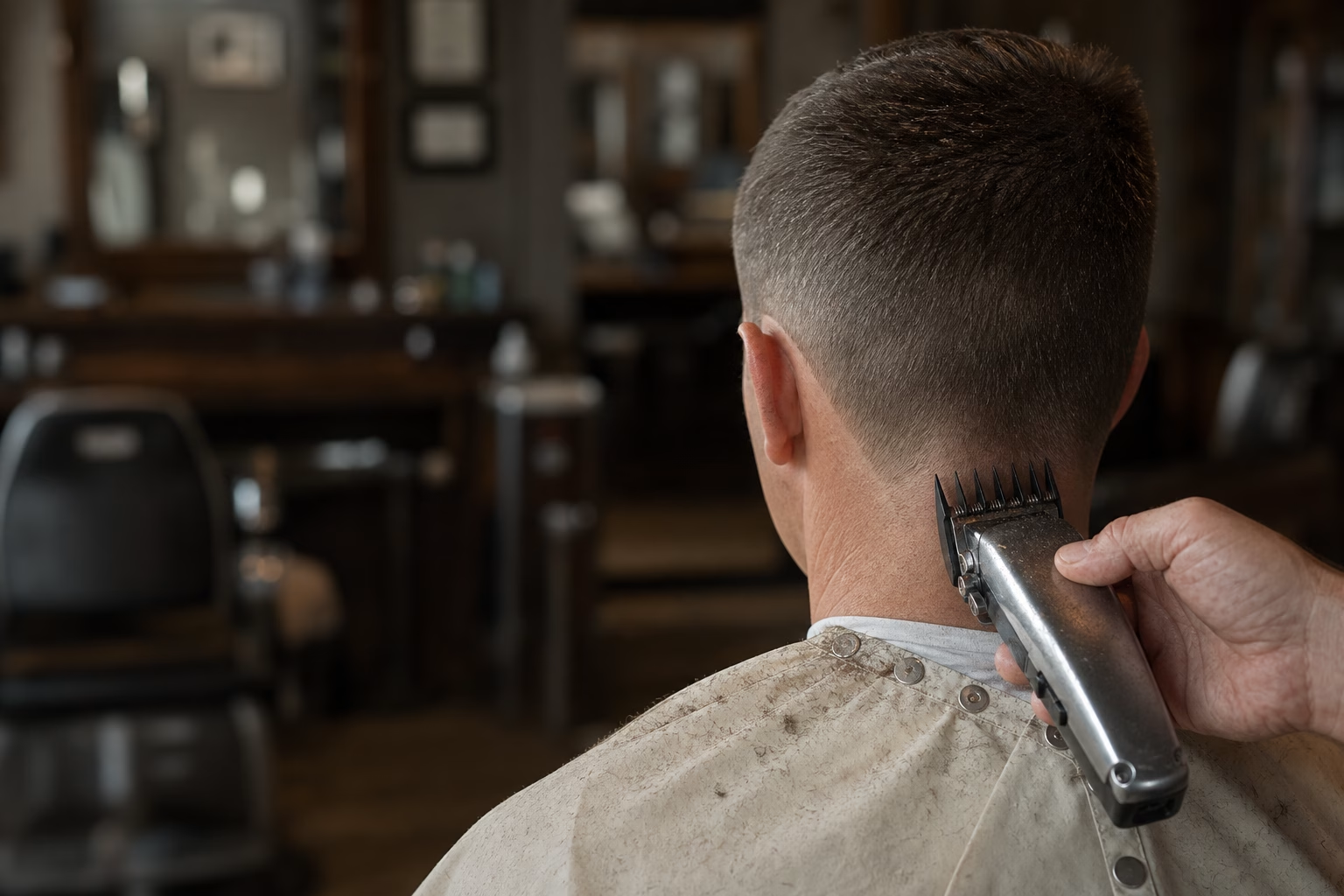
Many people can wear their hair short after FUE, but how short you can go before the dots show varies. At moderate short lengths, surrounding hair often camouflages the scars. At a full shave or skin fade, they may become visible, particularly after a large or repeated harvest.
Avoiding a linear scar is one of the main reasons people choose FUE, which gives more freedom to wear short hairstyles. Still, short is not the same as shaved, and no one can promise a clipper guard length that will hide every scar for every patient.
What affects visibility at short lengths
- Hair length. The closer the cut, the less hair is left to hide the dots. Skin fades and razor shaves are the most revealing.
- Remaining donor density. A dense donor area hides scattered dots better than a sparse one.
- Color contrast. Pale dots can stand out more when hair color and skin tone contrast strongly.
- Hair caliber and curl. Thicker or curlier hair may cover more skin than fine, straight hair.
- Number and spread of grafts. More extractions, or extractions clustered in one area, leave less cover.
If you like a very short cut, say so at your consultation. Your provider can examine your donor area and talk through what is realistic before any grafts are taken.
How FUT compares
With FUT, the visibility concern is a single line across the back of the head. Longer hair usually hides it, but a short cut can expose it. That is a common reason people who prefer short hair consider FUE, although the right method depends on your donor area and goals.
What Determines How Noticeable FUE Scars Are
No single factor decides how your donor area will look. It is the combination of tool, technique, how much is taken and how your skin heals.
Punch size
A smaller punch generally creates a smaller wound. A punch that is too small for your hair, however, can damage follicles during extraction. The size should balance graft quality against wound size for your specific hair, so ask what your provider plans to use.
Spacing and distribution
Extractions spread evenly across the safe donor zone leave hair between the scars to hide them. Taking many grafts from one small patch can create a thinned spot that draws the eye even if each scar is tiny.
Total grafts and donor density
Your donor area holds a limited number of follicles. The more grafts taken relative to what it can spare, the higher the chance of visible thinning and noticeable dots.
Skin type and keloid tendency
Some people heal with raised scars. Hypertrophic scars stay within the original wound, while keloids extend beyond it. If you or close relatives have formed keloids, or you have had raised scars after cuts, piercings or surgery, share that at your consultation so it can be factored into your candidacy and plan.
Technique, planning and aftercare
Careful handling of the skin and a plan that respects donor limits both matter. So does what happens at home: picking crusts, scratching or injuring healing sites can make scars more noticeable.
Questions to ask your provider
- What punch size do you plan to use for my hair, and why?
- How do you define and assess my safe donor zone?
- How many grafts can my donor area likely support now and in the future?
- How short could I realistically cut my hair after healing?
- How do you handle patients with a history of keloids or raised scars?
Overharvesting: The Scar Risk Most People Don’t Hear About
Overharvesting means taking too many follicles from the donor area, taking them too densely or taking them from outside the safe zone. The result can be a donor area that looks thin, see-through or patchy, where many small scars become visible together.
Because the donor supply is finite, a responsible plan balances the coverage you want now against what you may need later. Hair loss can continue over time, and follicles harvested today cannot be harvested again.
At AestheteMed, the team assesses donor area quality at consultation, and every plan is built around your face, hair loss pattern and donor area. Up to 5,000 grafts can be done in one procedure only when it is clinically possible and safe, and larger cases can be planned in stages on different days. Packages are based on the agreed treatment area rather than a fixed graft count. These are planning practices, not a guarantee of any outcome, but they are worth asking about at any clinic you consider.
Caring for Your Donor Area to Support Healing
The most important step is to follow your provider’s written aftercare instructions exactly. The points below are general and do not replace them.
Everyday care while you heal
- Keep the area clean the way your provider instructs, including when and how to wash.
- Do not pick, rub or scratch crusts. Let them shed on their own.
- Protect the healing scalp from direct sun, using the method your provider recommends.
- Avoid strenuous exercise, tight hats and friction on the area for as long as you are advised.
Our patient guide, linked from the FUE treatment page, explains how to prepare and what to do in the first 10 days.
Signs that need prompt attention
Contact your provider promptly if you notice increasing pain, spreading redness, warmth, pus, fever, or scars that become raised, hard or larger over time. These can point to infection or abnormal scarring and should be checked rather than waited out.
If you already have donor scars
If you have older scars from a previous transplant, including raised or tethered scars, options can be discussed at an in-person consultation. Whether any approach suits a scalp scar is decided case by case after examination.
How AestheteMed Approaches FUE in Hallandale Beach
AestheteMed is located at 2100 East Hallandale Beach Boulevard #100 in Hallandale Beach, FL, and sees patients from Miami, Aventura and Fort Lauderdale. Procedures are performed by Gianna Oliveira together with an experienced hair transplant team, under the medical supervision of Dr. Paul Goldberg.
The team uses a modern Turkish technique with Sapphire FUE and DHI, and individual hairline design is a key focus of every plan. For women, a DHI No-Shave option, without shaving the whole head, is available based on individual candidacy. You can read more about the benefits of FUE in a separate article.
Packages are Small at $6,000, Regular at $7,000 and Large at $8,000. They cover an agreed treatment area, not a set number of grafts. Financing is available, and current terms are explained at consultation. Your suitability, donor capacity and personal scar risk are assessed in person by a licensed provider before any procedure is recommended. Details are on our FUE hair transplant page.
Frequently asked questions
Does hair grow back in FUE scars?
Generally no. The follicle taken from each punch site is moved to the recipient area, so a healed site is typically a small spot without hair. The surrounding hair that was not harvested keeps growing and is what hides the dots.
Do I have to shave my head for FUE?
It depends on the technique and your plan. AestheteMed offers DHI No-Shave for women, which avoids shaving the whole head, based on individual candidacy. How much of the donor area may still need trimming is something to confirm at your consultation.
Does the recipient area scar too?
Early in healing, the recipient area can show small red points or crusts where grafts were placed. This article focuses on the donor area, where the lasting scar pattern from harvesting forms. Ask your provider what to expect in the recipient area for your case.
Sources