Do You Need a Vitamin D Shot? The Short Answer
Probably not. You may need one only if a blood test shows you are low and there is a specific reason oral vitamin D is not working or not practical for you. Most adults with low vitamin D are treated with oral supplements, usually vitamin D3 (cholecalciferol), and a shot is not automatically better. A provider may consider an intramuscular injection after a blood test confirms a deficiency. This usually happens when the gut does not absorb vitamin D well, when levels stay low despite taking pills as directed, or when keeping up with a daily or weekly pill is a genuine problem.
Do not choose a shot based on symptoms alone. Tiredness and aches have many possible causes, and it is possible to take too much vitamin D. The order matters: test first, then decide on the form of treatment with a licensed provider.
This guide covers who is at risk of low vitamin D, why the 25(OH)D test comes first, how oral and injectable vitamin D compare, who may be a candidate for a shot, and the safety limits to know before booking. It is a general overview. It does not give doses, injection schedules, or lab cutoffs, because those depend on your results, your history, and the reference ranges your lab uses.
What Is Vitamin D Deficiency, and Who Is at Risk Even in Sunny Florida?
Vitamin D deficiency means your blood level of vitamin D is below the range your lab and provider consider adequate. Vitamin D is best known for helping the body absorb calcium and maintain healthy bones. It also plays a role in muscle and immune function (see MedlinePlus on vitamin D).
Common vitamin D deficiency symptoms
Many people with low vitamin D have no obvious symptoms. When symptoms do appear, they tend to be vague:
- Fatigue or low energy
- Bone pain or aching
- Muscle aches or weakness
None of these proves a deficiency, because many other conditions cause the same complaints. A blood test is more useful than guessing.
Why living in Florida does not rule it out
Many South Florida residents assume year-round sunshine keeps their levels normal. In practice, sun exposure varies a lot from person to person. Factors commonly linked with lower vitamin D, as Cleveland Clinic outlines, include:
- Working indoors or avoiding midday sun
- Consistent sunscreen use and protective clothing (still important for skin cancer prevention)
- Darker skin, which makes vitamin D from sunlight less efficiently
- Older age
- Higher body weight
- Limited intake of foods that contain vitamin D
- Digestive conditions that affect fat absorption, and some kidney or liver conditions
- Certain medications
If several of these apply to you, ask your provider about testing.
Why Labs Come First: The 25(OH)D Blood Test
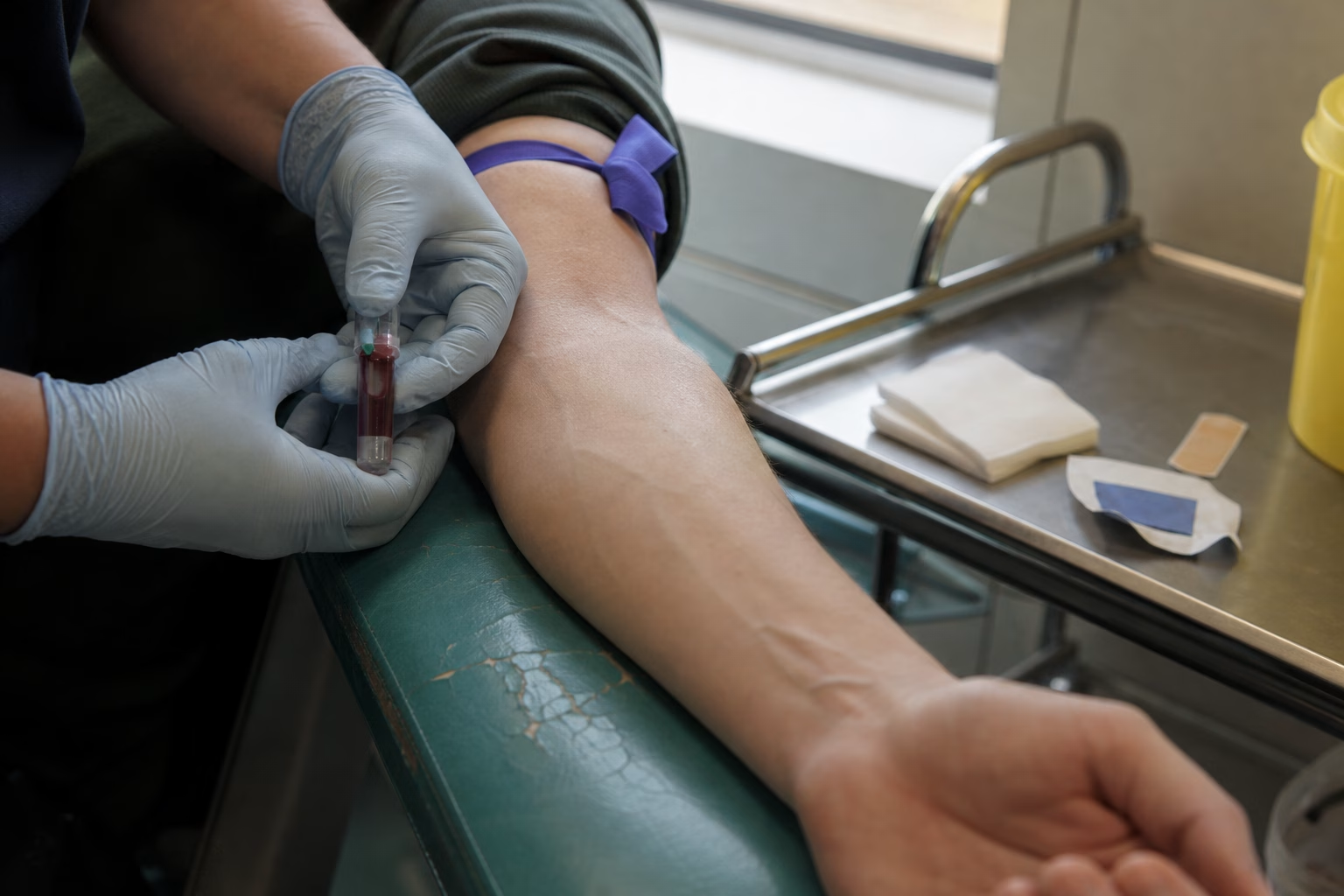
The standard blood test for vitamin D status measures 25-hydroxyvitamin D, written as 25(OH)D. It shows whether you need treatment at all, helps decide which form fits, and gives a baseline for checking progress later.
What the test tells your provider
Labs and medical organizations do not all use the same cutoffs for deficient, insufficient, adequate, and potentially too high. Your lab report lists the reference range that lab uses, and your provider interprets your result in light of your health history. A baseline result is also the main safeguard against overcorrecting.
Other labs that may be reviewed
Because vitamin D affects calcium, a provider may also check blood calcium and kidney function. Both are part of a comprehensive metabolic panel (CMP). If you had blood work done elsewhere recently, bring the results to your appointment.
At AestheteMed, blood panels with a provider review are interpreted by a licensed medical provider. Several of the clinic’s listed panels include a CMP. The published panel descriptions do not name a 25(OH)D test explicitly, so ask which panel includes it or whether a customized blood test is a better fit.
Oral Supplements vs Vitamin D Injections: How Do They Compare?
Both routes deliver vitamin D, but they differ in convenience and flexibility, and they suit different people. For most people, the practical question is not which route is stronger. It is which one will reliably bring your level into range and keep it there safely.
How each route works
You swallow oral vitamin D as a capsule, tablet, or liquid, and your gut absorbs it along with dietary fat. It is widely available, easy to adjust, and you can stop it right away if a recheck shows your level is climbing too high.
An intramuscular injection places vitamin D into a large muscle, where it forms a reservoir the body draws on gradually. Because it skips the digestive tract, it may help people whose gut does not absorb fat-soluble vitamins well. The trade-off is that once it is given, the dose cannot be paused or taken back.
A note on absorption claims
You may see claims that injections are absorbed far better than pills. Treat broad absorption claims with caution. Absorption differs from person to person, and a follow-up blood test is the only reliable way to know whether a plan is working.
Side-by-side comparison
| Factor |
Oral vitamin D |
Vitamin D injection |
| Where it is taken |
At home, by mouth |
In a clinic, into a muscle |
| Clinic visit for each dose |
No |
Yes |
| Can it be stopped quickly? |
Yes, stop taking it |
No, the dose stays in the muscle reservoir |
| Relies on gut absorption |
Yes |
No |
| Adjusting the plan |
Easy to change between rechecks |
Changed only at the next visit |
| Typical candidate |
Most adults with a normal digestive system |
Selected patients with malabsorption or real adherence problems |
Who Might Benefit From a Vitamin D Injection?
A provider is most likely to consider a vitamin D shot when oral vitamin D cannot do its job. That decision belongs to a provider who has reviewed your labs, medical history, and medications.
Situations where a provider may consider a shot
- Fat malabsorption. Conditions that interfere with how the gut absorbs fat can limit how much oral vitamin D reaches the blood. Examples include celiac disease, inflammatory bowel disease, and a history of weight-loss surgery.
- Persistent low levels. Some people take oral vitamin D exactly as directed and still test low on follow-up labs.
- Adherence challenges. If you genuinely cannot keep up with a daily or weekly pill, a less frequent clinic-based option may be worth discussing.
Even in these cases, an injection is a possibility, not a given. Follow-up testing is part of the plan so your provider can see whether your level is responding.
Who usually does fine on oral vitamin D
Adults who have a normal digestive system, no history of malabsorption, and a routine they can stick to generally start with oral supplements. For them, a shot may add cost and clinic visits without a clear advantage.
Safety: Can You Get Too Much Vitamin D?
Yes. Vitamin D is fat-soluble, so the body stores it, and more is not better. Very high levels can raise blood calcium (hypercalcemia), as MedlinePlus notes. Symptoms can include nausea, vomiting, weakness, increased thirst and urination, and confusion. Over time, high calcium can lead to kidney stones and kidney damage.
Why an injection needs extra care
If a recheck comes back high while you are taking oral vitamin D, you can simply stop. After an injection, the muscle reservoir keeps releasing vitamin D for some time after the visit. That is the main reason baseline labs and clinician oversight matter even more for shots than for pills. As with any intramuscular injection, soreness or bruising at the injection site can also occur.
Who should be especially cautious
Talk with your physician or specialist before any vitamin D injection if you have:
- Kidney disease or a history of kidney stones
- High blood calcium, now or in the past
- Sarcoidosis or another condition known to affect calcium or vitamin D handling
- Medications that may interact with vitamin D or calcium (bring a complete list, including heart and blood pressure medicines)
Also tell your provider about every source of vitamin D you already use, including supplements, multivitamins, fortified foods, and IV vitamin drips. Combining several sources can push your level too high without you realizing it.
How AestheteMed in Hallandale Beach Can Help
AestheteMed follows a lab-first approach for patients who want to know where their vitamin D stands. The clinic is at 2100 East Hallandale Beach Boulevard #100, Hallandale Beach, FL 33009, and serves patients from Miami, Aventura, and Fort Lauderdale. All medical treatments are performed under medical supervision.
Step 1: Blood work and a provider review
Start with lab testing at AestheteMed. The blood draw takes about 15 minutes. Afterward, a Laboratory Review Consultation with a licensed medical provider explains your results and recommends next steps. Follow any fasting instructions you receive when booking.
Step 2: An injection only if it fits your situation
Your provider may decide that vitamin D replacement is appropriate and that an injection suits you better than oral supplements. If so, you can read about the vitamin D intramuscular injection. The clinic’s wellness injections page describes the visit. It starts with a health screening that covers your goals, medical history, and signs of deficiency, and the shot is usually given in the deltoid or gluteal muscle. Ask your provider which vitamin D product is used and when to schedule your follow-up blood test.
Vitamin IV therapy is a separate service with a different purpose. It is not a substitute for lab-guided vitamin D treatment. The clinic’s IV page does not state whether any drip contains vitamin D, so confirm the ingredients with your provider if you are also managing your vitamin D level. Pricing for all services is confirmed at consultation.
Frequently asked questions
Will a vitamin D injection give me more energy?
Only if a confirmed deficiency is contributing to your fatigue, and even then any improvement comes from correcting the deficiency over time, not from the shot itself. If you are still tired after your level is back in range, tell your provider so other causes can be explored.
How long does it take to raise vitamin D levels?
It varies with your starting level, the form of vitamin D, how well you absorb it, and your body weight. Rather than counting on a fixed timeline, expect your provider to schedule a follow-up blood test to check how your level has responded.
Can I take oral vitamin D and also get injections?
Only if your provider specifically recommends it. Using both at once makes it harder to predict your level and raises the risk of overshooting, so a combined plan should come with scheduled rechecks.
Is a vitamin D injection safe?
It can be when a provider has confirmed a deficiency and checked your calcium, kidney function, and medications first. The main risks are getting too much vitamin D, which can raise blood calcium, and soreness or bruising where the shot is given. Because an injected dose cannot be stopped, a follow-up blood test is part of a safe plan.