Endospheres and Endermologie are both noninvasive, mechanical body treatments marketed to improve the look of cellulite, but they move tissue in different ways. Endospheres uses a handpiece with a rotating cylinder of small spheres that applies compression and microvibration. Endermologie, made by LPG, uses motorized rollers combined with suction that lift and roll a fold of skin. Neither gets rid of cellulite for good, both are given as a series of sessions, and there is no strong evidence that one works better than the other.
In practice, the choice comes down to how each treatment feels to you, what is available nearby, and whether you can commit to a multi-session course plus maintenance. Below is a side-by-side comparison, a frank look at what the evidence can and cannot tell you, the side effects to ask about, and a short checklist for deciding.
Disclosure: AestheteMed offers Endospheres Therapy, not Endermologie. This comparison aims to stay neutral and points out where independent evidence is missing.
Endospheres vs Endermologie at a Glance
The core difference is the mechanism: Endospheres presses and vibrates, while Endermologie pulls and rolls. Evidence is covered in its own section below rather than reduced to a table cell.
| Criterion |
Endospheres |
Endermologie (LPG) |
| Mechanism |
Rotating cylinder of small spheres delivering compression and microvibration |
Motorized rollers plus suction that lift, fold, and roll the skin |
| How it feels |
Rhythmic pressure and vibration moving across the skin |
A pulling, kneading sensation as skin is drawn into the treatment head |
| Typical course |
A series of sessions on a provider-set schedule, then maintenance |
A series of sessions on a provider-set schedule, then maintenance |
| US regulatory status |
Ask what FDA status the specific device holds and for which use |
Accepted by the FDA as a low-risk medical device, which does not mean the FDA has said it works; ask for the exact indication |
| Side effects to ask about |
Temporary redness, tenderness, or bruising from pressure |
Temporary redness, tenderness, or bruising from suction |
How Each Treatment Works
Both treatments apply mechanical force to the skin and the tissue just beneath it. Endospheres pushes tissue down with vibration, while Endermologie lifts it up with suction, and that difference shapes how a session feels.
Endospheres: Compression Microvibration
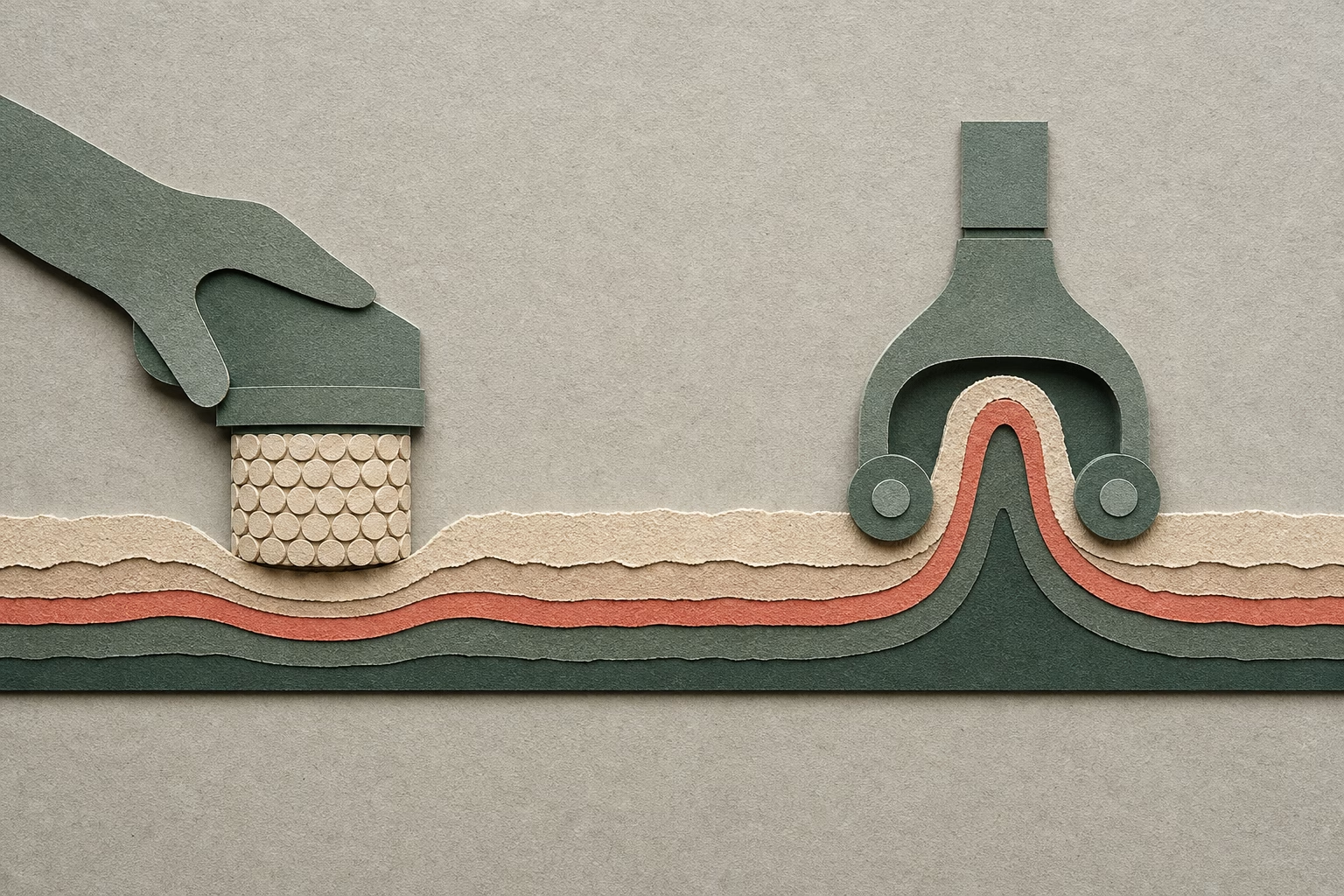
The Endospheres handpiece holds a cylinder made of small spheres. As the cylinder rotates over the treated area, the spheres press into the tissue in a rapid, repeating pattern, which is why the method is called compressive microvibration.
Endermologie: Suction and Rolling
An Endermologie head draws a fold of skin into a chamber using suction, while motorized rollers move that fold along the surface, much like a mechanized kneading massage.
Why Neither Removes Cellulite
According to Cleveland Clinic, cellulite forms when collections of fat push against the connective tissue beneath the skin and the fibrous bands connecting skin to muscle tighten unevenly, which creates a dimpled surface. Mechanical massage may change how that surface looks for a while, but it does not cut the fibrous bands or remove fat cells. Cleveland Clinic also notes there is no evidence that handheld massage tools improve the long-term appearance of cellulite. Claims about breaking down fat clusters or boosting collagen describe the intended effect, so ask your provider what published data supports them.
Sessions, Comfort, and Maintenance
Both treatments are sold as a course of repeated sessions rather than a single visit, and both need maintenance because the visible effect fades over time. Session count, spacing, and length depend on the device protocol, the area treated, and the provider’s plan, so ask for those details before you commit.
Comfort is the most noticeable practical difference. Some people dislike a pulling sensation; others find steady pressure and vibration less pleasant. Which suits you is personal, so tell your provider during the session if anything feels too intense.
For how AestheteMed structures its Endospheres sessions, see the Endospheres Therapy service page. Plans are set at consultation.
What the Evidence Shows for Cellulite and Lymphatic Drainage
Independent research on both devices is limited. The American Academy of Dermatology sums up the Endermologie studies this way: results vary, some studies found no difference compared with women who were not treated, others found a noticeable reduction, and the improvement was temporary. For Endospheres, ask the provider which published studies support the results they describe, since much of the available information comes from manufacturer and clinic materials.
Cellulite Appearance
Any change from mechanical massage is best understood as a temporary change in how the skin surface looks, not a structural fix. If a provider quotes a percentage improvement, ask which study it comes from and how long after treatment it was measured.
Lymphatic Drainage Claims
Lymphatic drainage is a separate claim from cellulite and should be judged on its own. Both devices are marketed for circulation and for reducing a feeling of fluid retention, and much of that messaging comes from manufacturers. Feeling lighter after a session is a real experience for many people, but it is not treatment of a medical condition. Persistent swelling or diagnosed lymphedema needs a physician’s assessment, not a cosmetic device.
Questions to Ask About Any Study or Claim
- Was the study independent, or funded and run by the manufacturer?
- How many people took part, and was there a control group?
- How long after the last session were results measured?
- Was the outcome a measurement, such as thigh circumference, or a subjective photo or self rating?
Side Effects and Who Should Check Before Treatment
Side effects from both devices are usually described as mild and short-lived, but no treatment is free of risk. A careful medical history before the first session is the most important safety step.
Possible Temporary Effects
Because both treatments apply pressure or suction, ask your provider about:
- Redness in the treated area
- Tenderness or soreness, similar to after a deep massage
- Bruising, especially at higher pressure or if you bruise easily
- Short-term skin sensitivity
Ask for the device-specific list of side effects and what to do if something does not settle.
Health Conditions to Discuss First
Tell your provider before treatment if any of the following apply, so they can decide whether treatment is appropriate or should wait:
- Pregnancy
- An active skin infection, rash, or open wound in the area
- A blood clotting disorder or use of blood thinners
- Varicose or inflamed veins, or a history of blood clots
- Recent surgery in or near the treatment area
- An implanted electronic device
- A current or past cancer diagnosis
This is not a complete list. Share your full medical history and medications at consultation.
Realistic Expectations and How to Choose
Realistic goals are smoother-looking texture and a lighter feeling in the treated area for a period of time, not a lasting change in shape or the disappearance of cellulite. Results vary between people and fade without maintenance; weight changes and activity levels also affect how cellulite looks.
Since neither device has been shown to be clearly superior, decide on practical grounds:
- Goal: smoother-looking texture, a feeling of lightness, or a change in shape and volume?
- Comfort: pressure and vibration, or suction and rolling?
- Availability: which device does a provider you trust offer nearby?
- Commitment: are you ready for a course plus maintenance?
- Budget: the cost of a full course is confirmed at consultation.
If your goal is more volume or a different silhouette rather than smoother skin, you are looking at a different category of treatment. Massage-based devices are not designed to add curves.
Endospheres at AestheteMed in Hallandale Beach
AestheteMed Beauty & Wellness Clinic, 2100 East Hallandale Beach Boulevard, Suite 100, Hallandale Beach, FL 33009, offers Endospheres Therapy, not Endermologie. The clinic serves patients from Miami, Aventura, and Fort Lauderdale, and each patient receives a personalized consultation and a plan built around their goals.
- For session format and booking, visit the Endospheres Therapy page.
- For more on benefits, results, and cost, read What Is Endospheres Therapy? Benefits, Results and Cost. Pricing is confirmed at consultation.
- If your goal is volume and curve enhancement rather than texture, BBL Injectable is a dermal filler treatment that the clinic notes can be combined with body contouring as part of a personalized plan. It is not a cellulite treatment.
- If you are working on weight management and want a baseline, the clinic’s Lab Testing service offers weight loss blood work, with results interpreted by a Medical Doctor or Nurse Practitioner in a separate review consultation.
Frequently asked questions
Is Endospheres better than Endermologie for cellulite?
There is no strong evidence that either one works better for cellulite. The practical deciders are your goal, which sensation you tolerate better, and which device a provider you trust offers.
What are the side effects of Endospheres?
Effects to ask about are mostly short-lived, such as redness, tenderness, or bruising where pressure is applied. Ask the provider for the device-specific list and disclose your full medical history first.
Is Endermologie FDA cleared?
According to the American Academy of Dermatology, the FDA accepted Endermologie as a medical device with little potential to cause harm, but the FDA has not said that it works. Clearance applies to a specific device model and indication, so ask the provider for the clearance details and check them in the FDA 510(k) database. Ask the same about any Endospheres device.
How many sessions are needed, and how long do results last?
Both treatments are given as a course followed by maintenance, and results fade without it. There is no single standard session count, and how long results last varies with the person, the area, and weight changes. For AestheteMed’s Endospheres schedule, see the clinic’s Endospheres Therapy page.
Can these treatments help with lymphatic drainage or swelling?
Both are marketed for a feeling of lightness and drainage, but independent evidence for these drainage claims is limited. Persistent swelling or diagnosed lymphedema should be assessed and managed by a physician.